Skip to content
  • facebook.com
  • twitter.com
  • t.me
  • instagram.com
  • youtube.com
Petroleum Engineering

Fueling Progress. Engineering Energy for the Future.

Subscribe
  • Home
  • About
  • Blog
  • Contact
  • Online Tools
  • Petroleum Engineering App
  • Home
  • Reservoir Engineering
  • Page 5
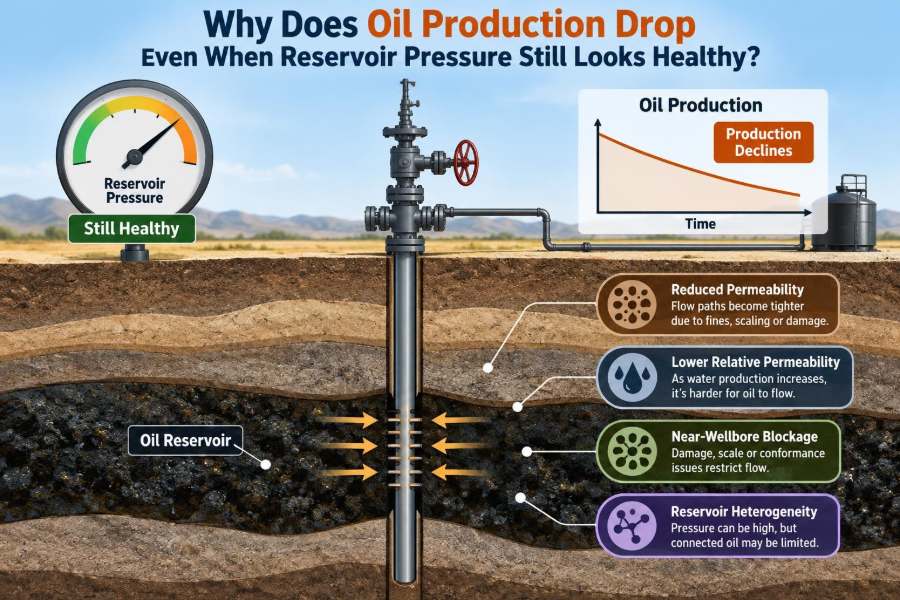
πŸ›’οΈ Why Does Oil Production Drop Even When Reservoir Pressure Still Looks Healthy?
Posted inFeatured

πŸ›’οΈ Why Does Oil Production Drop Even When Reservoir Pressure Still Looks Healthy?

Posted by admin October 8, 2026
A reservoir can retain pressure while a well loses deliverability. Explore water breakthrough, skin, gas, lift limits, and flow restrictions that explain the gap. πŸ“‰πŸ”πŸ› οΈ
Read More
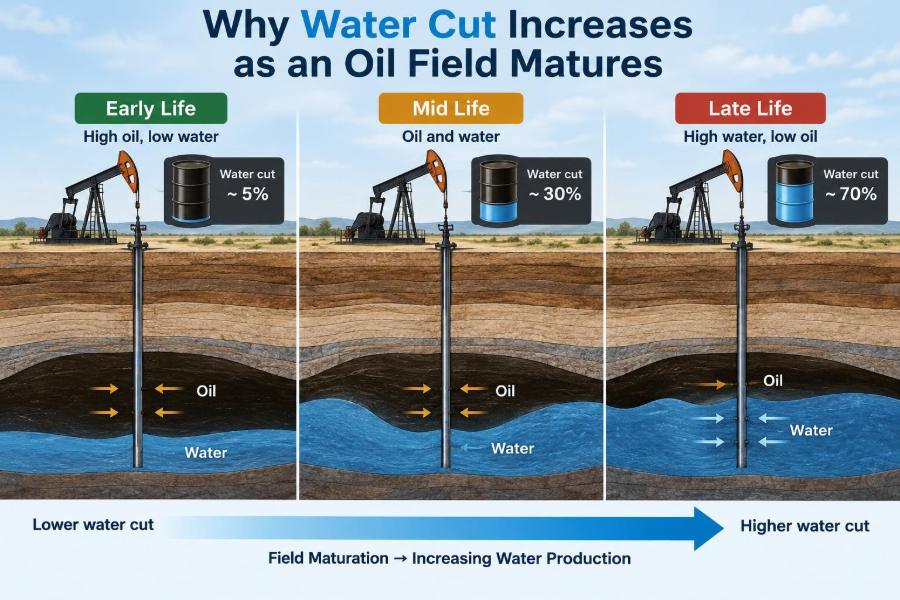
πŸ›’οΈ Why Water Cut Increases as an Oil Field Matures
Posted inFeatured

πŸ›’οΈ Why Water Cut Increases as an Oil Field Matures

Posted by admin October 5, 2026
A rising water cut can reflect normal reservoir behaviorβ€”or a costly well problem. Learn to spot coning, breakthrough, channeling, and integrity issues before choosing a response. βš™οΈπŸ“ˆπŸ”
Read More
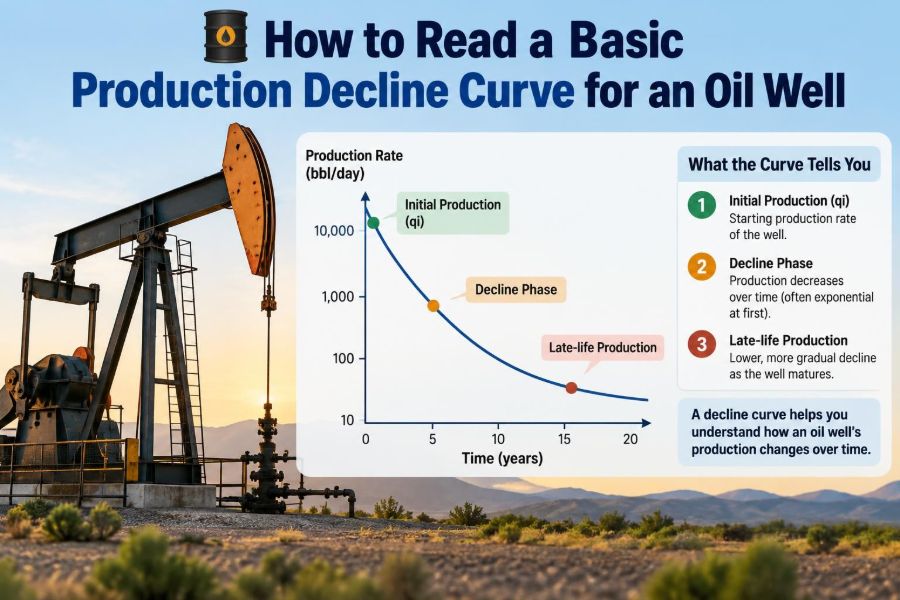
πŸ›’οΈ How to Read a Basic Production Decline Curve for an Oil Well
Posted inFeatured

πŸ›’οΈ How to Read a Basic Production Decline Curve for an Oil Well

Posted by admin October 5, 2026
A falling oil-rate line does not always mean reservoir depletion. Learn to read decline shapes, identify downtime and constraints, and build a more defensible forecast. πŸ“‰πŸ”§πŸ›’οΈ
Read More
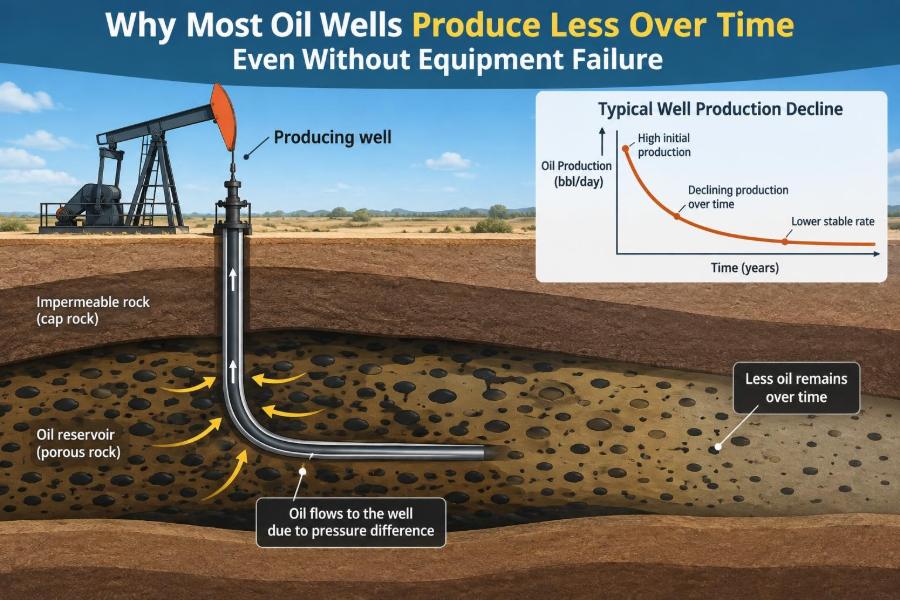
πŸ›’οΈ Why Most Oil Wells Produce Less Over Time Even Without Equipment Failure
Posted inFeatured

πŸ›’οΈ Why Most Oil Wells Produce Less Over Time Even Without Equipment Failure

Posted by admin October 4, 2026
A falling oil rate does not automatically mean broken equipment. Explore the pressure, water, gas, and flow changes happening deep in the reservoir. πŸ“‰πŸͺ¨πŸ”
Read More
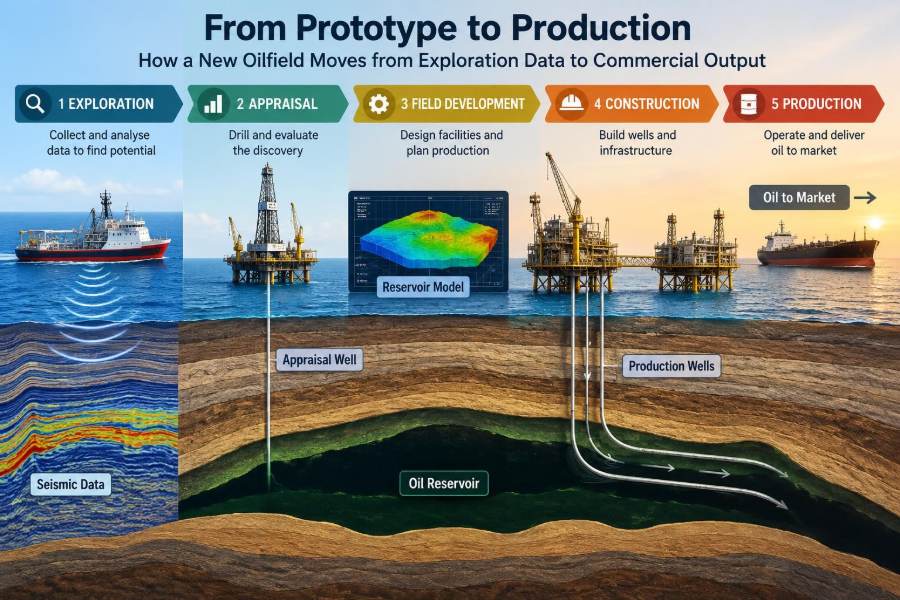
πŸ›’οΈ From Prototype to Production: How a New Oilfield Moves from Exploration Data to Commercial Output
Posted inFeatured

πŸ›’οΈ From Prototype to Production: How a New Oilfield Moves from Exploration Data to Commercial Output

Posted by admin October 3, 2026
A discovery is only the beginning. Follow the engineering path from appraisal wells and reservoir models to facilities, first production, and late-life closure. πŸ“ŠπŸ­πŸ¦Ί
Read More
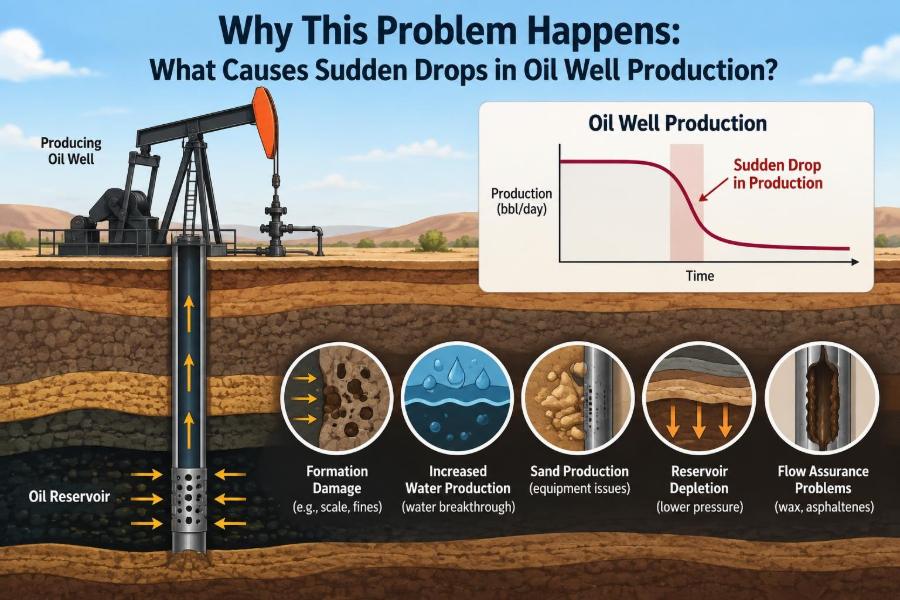
πŸ›’οΈ Why This Problem Happens: What Causes Sudden Drops in Oil Well Production?
Posted inFeatured

πŸ›’οΈ Why This Problem Happens: What Causes Sudden Drops in Oil Well Production?

Posted by admin October 2, 2026
A sharp rate drop can begin in the reservoir, pump, tubing, or flowline. Learn the clues that separate water breakthrough, scale, lift failure, and facility issues. πŸ”§πŸ“‰πŸ›’οΈ
Read More
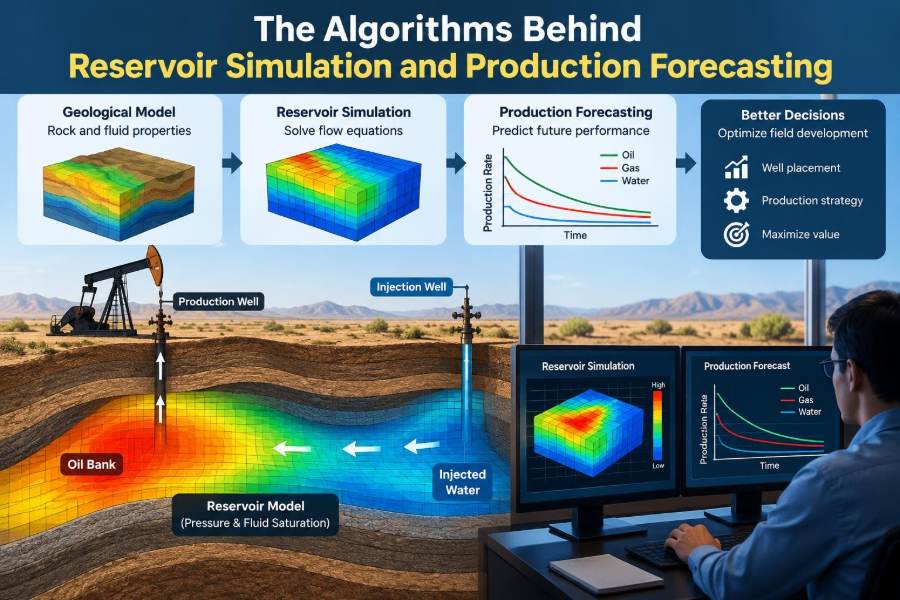
πŸ›’οΈ The Algorithms Behind Reservoir Simulation and Production Forecasting
Posted inFeatured

πŸ›’οΈ The Algorithms Behind Reservoir Simulation and Production Forecasting

Posted by admin October 1, 2026
Go beyond production curves: see how grids, flow equations, well controls, history matching, and uncertainty shape reservoir forecastsβ€”and where models can mislead. πŸ”¬πŸ“ˆπŸ§ 
Read More
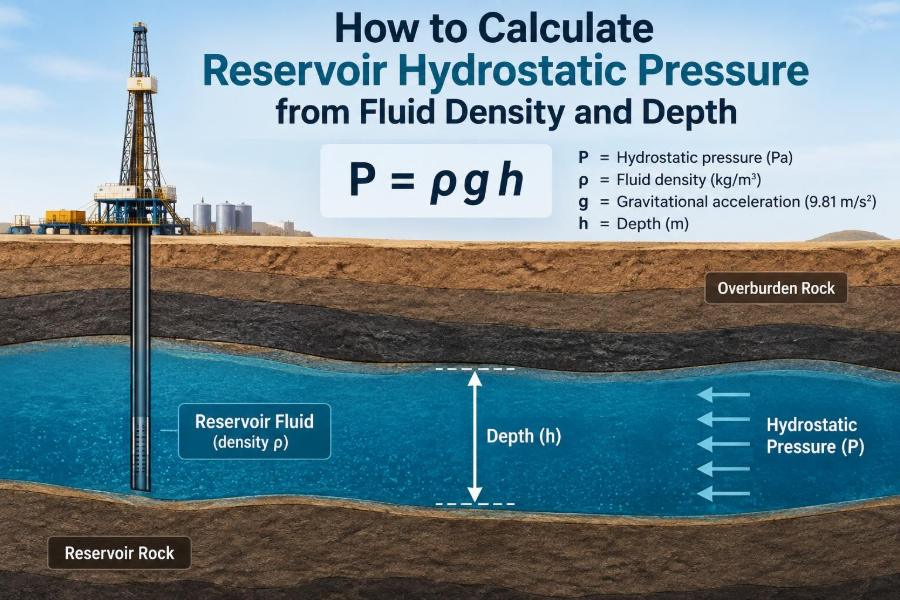
πŸ›’οΈ How to Calculate Reservoir Hydrostatic Pressure from Fluid Density and Depth
Posted inFeatured

πŸ›’οΈ How to Calculate Reservoir Hydrostatic Pressure from Fluid Density and Depth

Posted by admin September 30, 2026
Turn fluid density and true vertical depth into a reliable hydrostatic pressure estimate. Learn the equations, units, contacts, and traps that matter in real wells. πŸ§ͺπŸŒŠβš™οΈ
Read More
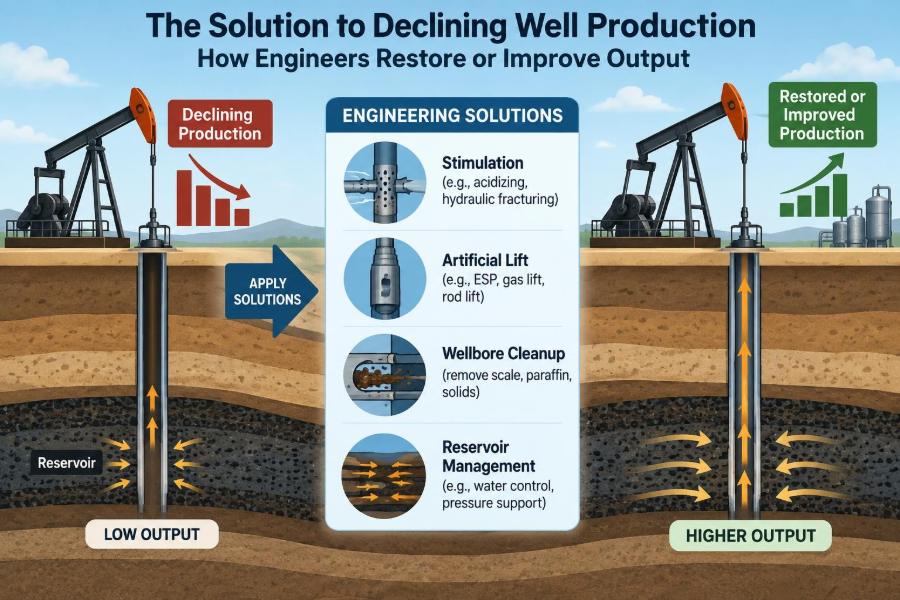
πŸ›’οΈ The Solution to Declining Well Production: How Engineers Restore or Improve Output
Posted inFeatured

πŸ›’οΈ The Solution to Declining Well Production: How Engineers Restore or Improve Output

Posted by admin September 29, 2026
A falling rate can signal depletion, damage, lift problems, scale, water, or equipment failure. Learn how engineers diagnose the real bottleneck before choosing a fix. βš™οΈπŸ“‰πŸ”
Read More
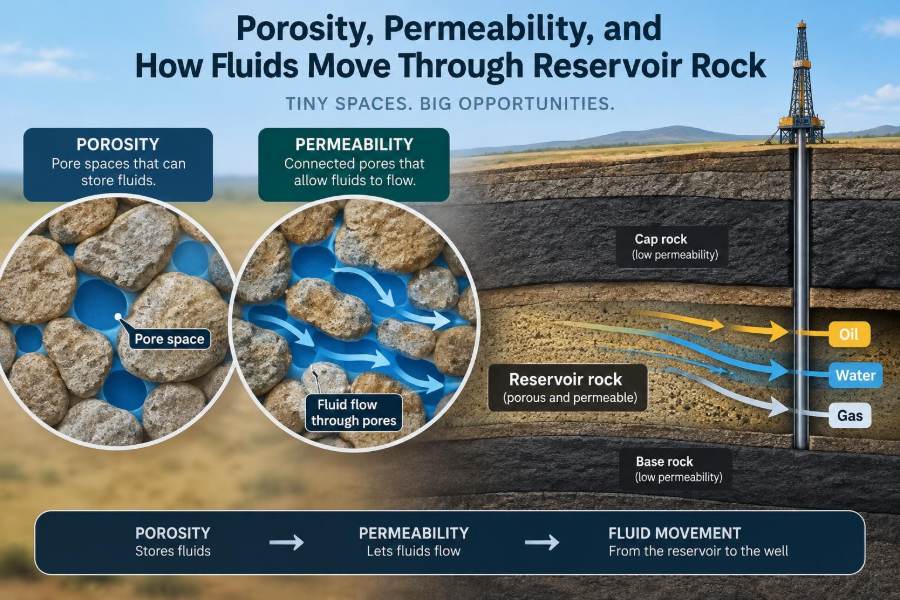
πŸ›’οΈ Understanding Porosity, Permeability, and How Fluids Move Through Reservoir Rock
Posted inFeatured

πŸ›’οΈ Understanding Porosity, Permeability, and How Fluids Move Through Reservoir Rock

Posted by admin September 28, 2026
A reservoir can hold plenty of oil yet produce poorly. Explore pore throats, pressure gradients, saturation, wettability, and the rock properties that control flow. πŸ“‰πŸ’§πŸ”¬
Read More

Posts pagination

Previous page 1 … 3 4 5 6 7 8 Next page
Recent Posts
  • πŸ›’οΈ The Evolution of Well Logging: From Basic Measurements to Real-Time Downhole Intelligence
  • πŸ›’οΈ Why Is Bottomhole Pressure So Important for Understanding Well Performance?
  • πŸ›’οΈ How Long Can an Oil Reservoir Continue Producing Before Recovery Becomes Uneconomic?
  • πŸ›’οΈ Dealing With Sand Production: How Oil Wells Control Formation Solids Without Losing Output
  • πŸ›’οΈ How to Measure Wellhead Pressure, Flow Rate, and Production Stability
Recent Comments
    Archives
    • November 2026
    • October 2026
    • September 2026
    • August 2026
    • March 2025
    • February 2025
    • November 2021
    • August 2021
    • July 2021
    Categories
    • Advanced Concepts
    • Basics
    • chemical engg thermodynamics
    • drilling operations
    • Featured
    • fluid mechanics
    • geophysics
    • Heat Transfer
    • Introductions
    • mass transfer
    • Natural Gas
    • petroleum equipment design
    • petroleum formation evaluation
    • petroleum geology
    • petroleum production
    • petroleum refining and petrochemicals
    • reservoir engg
    Meta
    • Register
    • Log in
    • Entries feed
    • Comments feed
    • WordPress.org
    Copyright 2026 — Petroleum Engineering. All rights reserved. Bloghash WordPress Theme
    Scroll to Top